Regulatory Compliance Watch: Another attempt to end SEC ‘gag’ rule
Regulatory Compliance Watch wrote about our amicus brief in Powell, et al. v. Securities and Exch. Comm’n.


Regulatory Compliance Watch wrote about our amicus brief in Powell, et al. v. Securities and Exch. Comm’n.
Our co-founder and director of litigation, Ted Frank, was mentioned in an article in The Washington Free Beacon about New York University School of Law canceling a Federalist Society event.

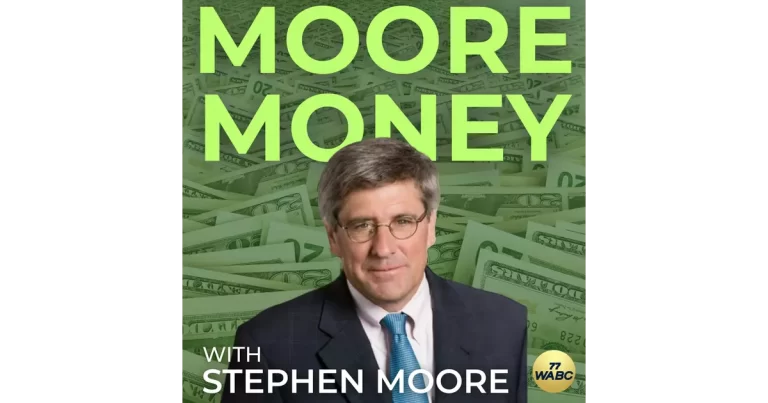
Our co-founder and director of litigation, Ted Frank, appeared on “Moore Money” with Stephen Moore to discuss HLLI’s work fighting class-action abuse.
Ted Frank, Hamilton Lincoln Law Institute's co-founder and director of litigation, was mentioned in an ABA Journal article about a lawyer losing his job after posting a comment about Charlie Kirk's murder.

HLLI co-founder Ted Frank joined John Solomon on "John Solomon Reports" to discuss the group’s recent free-speech victory in Kohls v. Bonta.

On Friday, August 29, The Hamilton Lincoln Law Institute (HLLI) secured a major First Amendment victory when a federal court permanently struck down a second California law that barred the sharing of political satire created with Al technology.
Just the News wrote about our recent win in Kohls v. Bonta, when a federal court permanently enjoined with respect to Christopher Kohls, also known as popular You Tube star, "Mr Reagan", and other plaintiffs, a California law that barred the sharing of political satire created with AI technology.
The Volokh Conspiracy covered HLLI's recent victory in Kohls v. Bonta, in which a federal court permanently struck down a California law that barred the sharing of political satire created with AI technology.
Today, HLLI appealed from a August 7 district court order dismissing its class action complaint. “We are confident in our chances on appeal,” said Ted Frank, HLLI’s Director of Litigation.
The Washington Free Beacon covered the Hamilton Lincoln Law Institute's case, Faoro v. Jewish Voice for Peace Inc., et al. in which an attorney representing one of the anti-Israel activists cited fictitious case law, suggesting the document was written by an AI chatbot like ChatGPT.